Behind the Build
How Oakley Built the Spectors
By Oakley Innovation Team | May 7, 2026 | 8 min read
It started with a really simple, really frustrating moment.
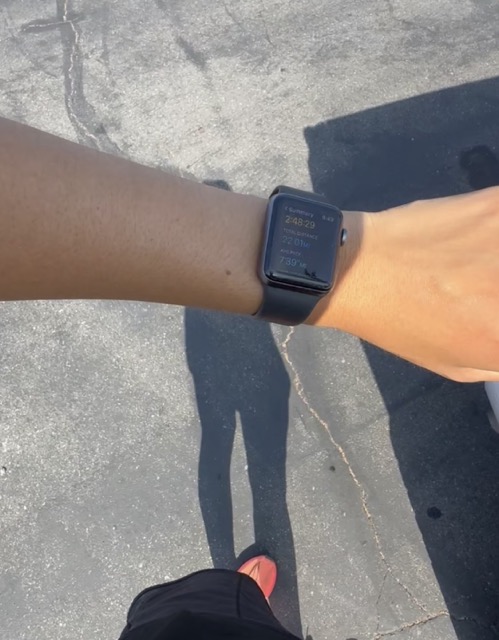
One of our lead product designers, a competitive runner who logs about 50 miles a week, was three miles into a tempo run when she glanced at her Apple Watch. In that split second, her form broke, her breathing stuttered, and she lost that flow state that’s hard to get back into. She finished the run annoyed. Not at her pace, but at the glance of her watch.
That glance became the Spectors.
The Problem Nobody Was Solving
We had been watching the wearable space for years. Garmin makes incredible watches. Apple Watch was an early start to digital data. But both of them share the same fundamental flaw for endurance athletes: they require you to look away from what you are doing to see data about what you are doing. That is a strange design choice when you think about it hard enough.
We surveyed over 100 competitive runners, cyclists, and triathletes. The feedback was consistent: athletes wanted their data in their field of view. Not on their wrist. Not on their phone. Right there, while they moved.
We already knew AR technology was advancing fast. The question was not whether it was possible. It was whether we could make it feel like Oakley. Lightweight. Durable. Designed for the demands of real athletic performance, not a tech demo.
The first prototype was, honestly, not pretty. It weighed almost twice what our standard sport frames do, the display resolution was rough, and the battery life barely made it through a 5K. We knew we had something, but it needed a lot of work.
The Display Challenge
Getting the AR overlay right was our biggest technical hurdle. The display needed to be bright enough to read in direct sunlight, which is exactly the condition most athletes train in, but not so bright that it became a distraction. We went through 11 different display configurations before landing on the monocular projection system in the final Spectors design.
The key breakthrough was treating the display like a HUD, a heads-up display, rather than a screen. Instead of trying to show everything, we focused on showing the right things at the right time. Pace. Heart rate. Distance. Time. That is it. Clean, readable, instant.
Making It Feel Like Oakley
Our frame team has been engineering performance eyewear since 1975. That legacy meant we had zero tolerance for a product that compromised on fit, durability, or optical clarity. The Spectors use our Recycled O Matter frame material, the same lightweight, stress-resistant compound in our top sport frames, combined with Unobtainium nose and ear grip that actually gets more secure when you sweat.
The Prizm lens technology handles UV and optical performance. The AR system sits on top of that, seamlessly integrated rather than bolted on. If you did not know to look for the projection element, you might not notice it at all.
What the HUD Actually Looks Like
A lot of people picture something out of a sci-fi movie. The reality is much more subtle, and that is intentional. Here is a simulation of exactly what you would see mid-run:

It sits in the lower peripheral of your vision, present when you want it, easy to ignore when you do not. Athletes in our beta program described it as feeling like the data was always there, waiting, rather than something they had to go find.
Connecting to the Devices You Already Use
We made a deliberate decision early on: the Spectors would not try to replace your existing devices. Your Garmin. Your Apple Watch. Your Whoop. These are tools athletes trust and have invested in. We were not going to ask you to start over.
Instead, the Spectors connect via Bluetooth 5.2 and pull data directly from your existing device. Setup takes about 90 seconds. Once it is paired, it just works, automatically, every time you put the glasses on. The data you have always been tracking shows up exactly where you have always wanted it.
The Camera
One thing that surprised us during testing was how much athletes loved the built-in 12MP POV camera. We added it almost as an afterthought, but it turns out there is a huge demand for true first-person race footage that does not require a chest mount or helmet cam. Cyclists especially responded to this. Your perspective, your data, your story.